Comprehensive Analysis of Thermal Protection for Three-Phase Asynchronous Motors
Three-phase asynchronous motors, as the most commonly used power equipment in modern industry, are widely applied in machinery manufacturing, metal processing, chemical, textile, construction materials, food packaging, and other industries. Due to their simple structure, reliable operation, easy maintenance, and moderate cost, they have become the indispensable “power heart” of factory workshops.
However, even the most robust motors cannot withstand prolonged overload and high-temperature operation. Motors generate substantial heat during operation, and if heat dissipation is inadequate or protection measures are insufficient, it can easily lead to insulation aging, winding burnout, mechanical failures, or even production shutdowns. Therefore, thermal protection is critical to ensure the safe and efficient operation of motors.
A. Why Do Three-Phase Asynchronous Motors Overheat?
Motor overheating is a common operational hazard, and the main causes can be summarized as follows:
a. Overload Operation
When the motor drives a load exceeding its rated capacity, the current increases significantly, causing higher heat generation. Prolonged overload operation not only results in excessive temperature rise but may also burn out the windings.
b. Abnormal Power Supply Voltage
Low voltage: The motor draws more current to maintain output power, leading to overheating.
Voltage imbalance: Asymmetrical three-phase voltage causes unstable motor operation, excessive current in certain windings, and abnormal temperature rise.
c. Poor Heat Dissipation Conditions
Motors usually rely on fans for forced ventilation. If airflow paths are blocked, fans are damaged, or ambient temperature is high with excessive dust, heat dissipation efficiency is reduced.
d. Mechanical Faults
Issues such as stuck bearings, rotor imbalance, or improperly installed couplings can generate additional friction and vibration, leading to overheating.
e. Frequent Start-Stop Cycles
Starting currents are typically 5–7 times the rated current. Frequent starting and stopping cause continuous accumulation of winding temperature, resulting in overheating.
f. Environmental Factors
High temperature, high humidity, and dusty environments affect insulation performance and heat dissipation efficiency, accelerating motor aging.
B. Main Methods of Thermal Protection
To prevent motor damage due to overheating, engineers typically employ the following thermal protection methods:
a. Thermistor (Thermal Resistor)
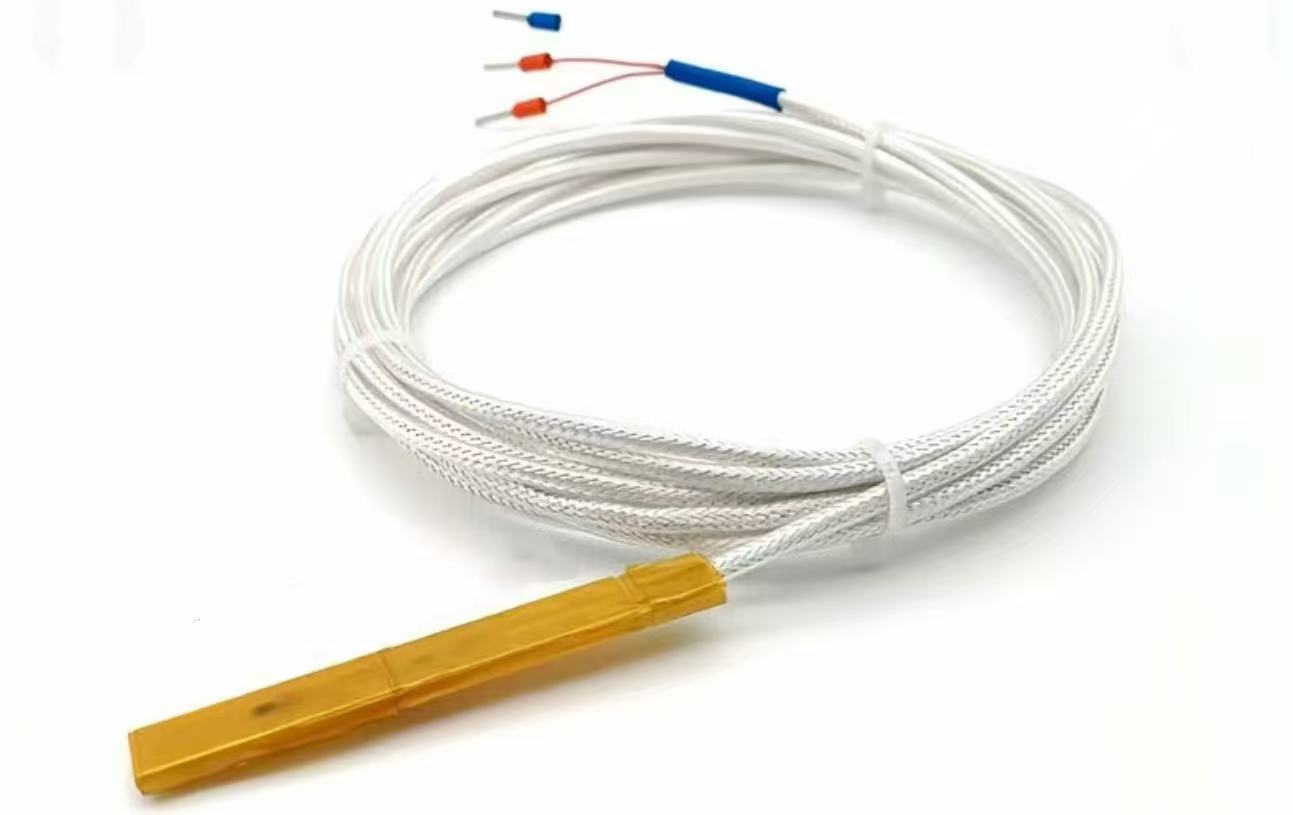
A thermistor is a temperature-sensitive resistor whose resistance value changes significantly with temperature. Thermistors can be classified based on how their resistance changes with temperature:
Negative Temperature Coefficient (NTC): Resistance decreases as temperature rises.
Positive Temperature Coefficient (PTC): Resistance increases as temperature rises.
In three-phase asynchronous motors, PTC thermistors are often embedded in the stator windings. When the temperature exceeds a set threshold (e.g., 120°C or 150°C), the resistance rises sharply, and the controller immediately cuts off the power.
✅ Advantages:
High sensitivity and fast response.
Small size, easy to embed within the motor.
Low cost and high reliability.
⚠️ Disadvantages:
Limited temperature measurement range (typically -50°C to +250°C).
Nonlinear characteristics requiring electronic circuit compensation.
Limited overload capacity; cannot withstand high currents.
b. Thermal Relay Protection
Thermal relays use bimetallic strips that deform when heated. When the current exceeds the set value, the bimetallic strip bends to trigger the contacts and cut off the power.
✅ Advantages:
Low cost, simple structure, suitable for small motors.
⚠️ Disadvantages:
Delayed response, sensitive to ambient temperature, limited accuracy.
c. Electronic Protection Devices
Electronic protectors use current transformers and electronic circuits to monitor motor current and temperature in real time, calculating accumulated heat. When thresholds are exceeded, power is cut off.
✅ Advantages:
High sensitivity and comprehensive protection (phase loss, overcurrent, stall, etc.).
⚠️ Disadvantages:
Requires power supply, higher cost.
d. Temperature Sensor Protection
Thermistors (PTC/NTC) or thermocouples are installed in motor windings or bearings to measure temperature directly. When temperature exceeds the set value, an alarm is triggered or the motor is stopped.
✅ Advantages:
Accurately reflects internal motor temperature.
⚠️ Disadvantages:
Complex installation, requires integration with a control system.
e. Intelligent Protection Devices
Intelligent motor protectors have become increasingly popular. They can monitor current, voltage, and temperature in real time, record historical data, and provide remote monitoring.
✅ Advantages:
Comprehensive protection, data visualization, suitable for modern factories.
⚠️ Disadvantages:
Higher cost and requires professional setup.
C. Relationship Between Thermal Protection and Energy Efficiency
Proper thermal protection not only extends motor lifespan but also improves operational efficiency and reduces energy waste. Studies show that motor overheating can reduce efficiency by 2–5% and significantly shorten insulation life. Scientific thermal protection effectively reduces maintenance costs, prevents unplanned downtime, and delivers higher economic benefits to enterprises.
D. Industry Development Trends
With the development of Industry 4.0 and smart manufacturing, motor thermal protection is increasingly moving toward intelligence and digitization:
a. Real-time Monitoring: Using sensors and IoT technology to continuously track motor operating status.
b. Predictive Maintenance: Leveraging big data and AI algorithms to forecast motor lifespan and provide early warnings.
c. Remote Operations and Maintenance: Implementing cloud-based management, enabling engineers to monitor and address motor faults in real time from remote platforms.
These trends are driving traditional motor protection methods toward smarter and more efficient solutions.
E. fuxingmotor’s Motor and Thermal Protection Solutions
As a professional manufacturer and supplier of three-phase asynchronous motors, fuxingmotor (www.fuxingmotor.com) not only provides high-performance, high-efficiency motor products but also offers comprehensive thermal protection solutions.
a. Our motors can be equipped with thermistors, electronic protectors, and other options to meet different application requirements.
b. All motors undergo strict factory testing to ensure stable operation and controlled heat generation.
c. We provide customized protection configurations based on customer operating conditions, helping reduce maintenance costs and extend motor lifespan.
If you are seeking reliable three-phase asynchronous motors or thermal protection solutions, visit www.fuxingmotor.com or contact our engineering team for support.
F. Conclusion
Thermal protection is not only a safety measure for three-phase asynchronous motors but also a key factor in ensuring continuous production and reducing energy consumption. From traditional thermal relays to modern intelligent protectors, thermal protection technology continues to evolve.
In the future, with the prevalence of smart manufacturing, motor protection will become more intelligent, visualized, and efficient. Choosing the appropriate thermal protection method and implementing proper maintenance management not only extends motor lifespan but also delivers tangible economic benefits. fuxingmotor, as a trusted motor partner, will continue to provide high-quality motors and integrated protection solutions, supporting efficient and safe industrial operations worldwide.