How to Perform Three-Phase Motor Wiring
When it comes to three-phase electric motors, wiring is a crucial aspect that ensures the motor functions properly and efficiently. Understanding the basics of 3 phase electric motor wiring is essential for anyone working with these types of motors, whether you're an electrician, engineer, or DIY enthusiast.
What is a Three-Phase Motor?
A three-phase motor is an electric motor that operates on a three-phase power supply. This type of motor is widely used in industrial applications due to its efficiency, reliability, and durability. The motor consists of a stator (the stationary part) and a rotor (the rotating part). The stator windings are arranged in such a way that when a three-phase alternating current is applied, a rotating magnetic field is generated, which in turn rotates the rotor.
Wiring a Three-Phase Motor
Wiring a three-phase motor involves connecting the motor's windings to a three-phase power supply. Here are the basic steps:
1.Identify the Motor Connections
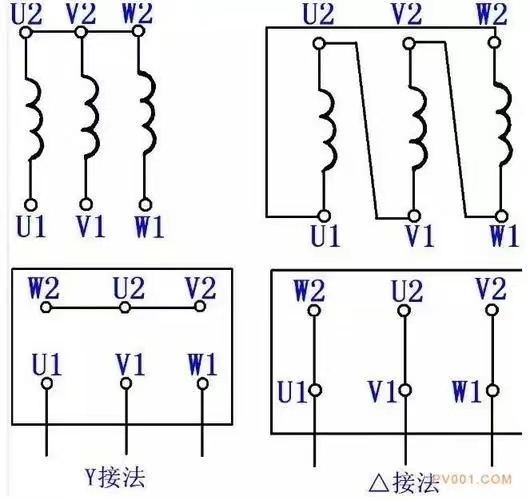
Most three-phase motors will have six or nine leads coming out of the motor. These leads are typically labeled U1, V1, W1 (and possibly U2, V2, W2 for a nine-lead motor). Usually U1 corresponds to V2, V1 corresponds to W2, and W1 corresponds to U2 so that the upper and lower terminals are not connected to each other.
2.Prepare the Power Supply
Ensure that you have a three-phase power supply available. This can be from a utility company or a three-phase generator. The power supply should provide three sinusoidal waveforms that are 120 degrees out of phase with each other.Voltage fluctuation should not exceed ± 5 per cent and frequency fluctuation should not exceed ± 2 per cent. Voltage and frequency fluctuation at the same time within 5 per cent, frequency fluctuation does not exceed 2 percent, try to maintain the stability of the voltage, which is more conducive to improving the service life of the 3-phase asynchronous motor.
3.Connect the Motor
Connect the U1, V1, and W1 leads (and U2, V2, W2 if applicable) to the corresponding phases of the power supply. It is important to ensure that the phases are connected correctly to avoid damage to the motor or power supply.
4.Grounding
Ensure that the motor frame is properly grounded for safety reasons. Of course, if the conditions can not reach, you can not connect the grounding wire, does not affect the use but relatively unsafe.
5.Testing
Before starting the motor, perform a visual inspection to ensure all connections are tight and secure. Then, using a voltmeter or multimeter, check for voltage between each phase and ground to ensure there are no shorts.
6.Start the Motor
Once everything is checked and confirmed to be safe, you can start the motor. Monitor the motor closely during startup to ensure it is operating smoothly and within normal parameters.
Safety Considerations
Working with electricity can be dangerous, so it's important to follow safety precautions:
Always disconnect the power supply before working on the wiring.
Use insulated tools and wear protective gloves and clothing.
Ensure that all connections are tight and free of corrosion to prevent arcs or shorts.
If you're not familiar with electrical wiring, consult a professional electrician.
Conclusion
Wiring a three-phase electric motor may seem daunting at first, but with a basic understanding of the principles involved and by following the correct safety procedures, it can be done safely and effectively. Remember, electricity is dangerous, so always err on the side of caution and consult a professional if you're unsure about anything.