Difference between China's motor energy efficiency class and IEC energy efficiency class
In today's era of focusing on energy efficiency and environmental protection, the classification of energy-efficiency ratings for electric motors is of great significance as a key piece of equipment that is widely used in industrial, commercial and civil applications. China has developed its own standards for energy efficiency ratings of electric motors, while the International Electrotechnical Commission (IEC) also has corresponding regulations for energy efficiency ratings. Understanding the difference between the two, for the correct selection and use of motors, promote energy saving and emission reduction has an important role.
1、 the standard development background and purpose
China's motor energy-efficiency rating standards are developed to adapt to the domestic energy situation and industrial development needs, promote technological progress in the motor industry, improve energy efficiency, reduce energy consumption and greenhouse gas emissions. The IEC energy-efficiency rating standard is designed to establish a unified motor energy-efficiency evaluation system on a global scale and promote international trade and technology exchange.
2、Classification of Energy Efficiency Levels
China's motor energy efficiency class is usually divided into three levels, i.e. Level 1, Level 2 and Level 3, with Level 1 being the highest and Level 3 the lowest. The new national standard also adds the super-efficient IE4 and IE5.
The IEC energy efficiency classes are divided into IE1, IE2, IE3 and IE4, with IE4 being the highest.
There is a slight difference between the Chinese standard and the IEC, and the following is a simple and intuitive guide to the differences.
IEC60034-30-1 | GB18613-2012 China 2012 Edition Standard |
IE4 | Energy efficiency class I |
IE3 | Energy efficiency class 2 |
IE2 | Energy efficiency class 3 |
IE1 |
3、Test Methods and Conditions
China's energy efficiency test methods for electric motors are mainly based on national standards, including the load characteristics of motors, operating conditions, measurement accuracy and other aspects are clearly defined.
The IEC energy efficiency test methods follow the international common standards and norms, which may differ from the Chinese standards in some details.
4、Scope of application
China's energy efficiency rating standards for electric motors are mainly applicable to electric motors produced, sold and used in mainland China.
IEC energy-efficiency rating standards have wider international applicability and are adopted by many countries and regions.
5、Labeling and Certification Requirements
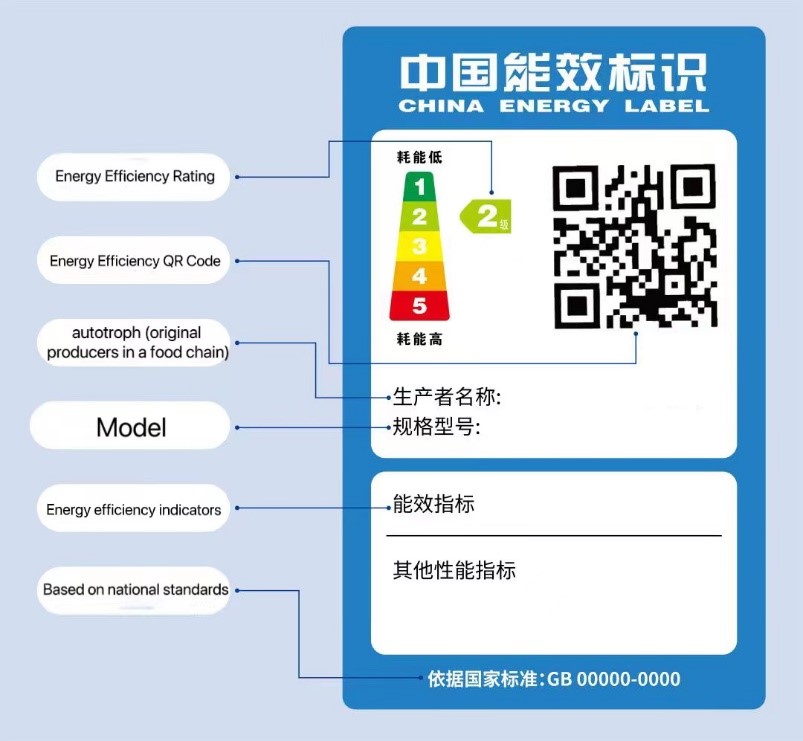
In China, motors that meet the requirements of energy-efficiency ratings need to be labeled with an energy-efficiency mark on the product and certified by the relevant certification body. The following is a common energy-efficiency labeling chart in China, which contains many, many contents: energy efficiency grade, energy efficiency two-dimensional code, the name of the producer, specifications, energy-efficiency indicators, based on the national standards.
Motors with IEC energy efficiency ratings also need to be labeled and certified accordingly, but the certification bodies and procedures may be different from those in China.
6、Impact on industry and market
The implementation of China's motor energy-efficiency rating standards has promoted the technological innovation and product upgrading of domestic motor enterprises, and facilitated the continuous expansion of the market share of high-efficiency motors.
The promotion of the IEC energy efficiency rating standard helps to improve the energy efficiency level of the global motor industry and promotes the competition and cooperation in the international market.
In summary, there are certain differences between the energy efficiency levels of Chinese motors and IEC energy efficiency levels in terms of standard setting background, energy efficiency level classification, testing methods, scope of application, labeling and certification. In practical applications, enterprises and users need to choose motor products that meet corresponding standards according to their own needs and market conditions, in order to achieve a win-win situation of energy conservation, emission reduction, and economic benefits.
China Fuxing Motor produces all specifications of 3-phase asynchronous motors from 1E2 to IE5 Maximum production of 3-phase asynchronous motors with class 1 energy efficiency, contributing to global energy saving and emission reduction, China Fuxing Motor, as a professional 3-phase asynchronous motor manufacturer and supplier in China, can satisfy any of your needs, if you are interested in our products, please feel free to get in touch with us and we will give you a reply at the first time. you a reply at the first time.