How does an induction motor work?
An induction motor, also known as an asynchronous motor, is a type of AC motor widely used in industrial and household appliances. The principle of operation is based on the law of electromagnetic induction, which means that electromagnetic induction produces an electric potential and current in a conductor, which in turn produces a torque that drives the motor to rotate. In order to give you a better understanding of how induction motors work, we will answer this question step by step below, starting from the basic principles.
A. What is an induction motor?
An induction motor, is an electric motor that converts electrical energy into mechanical energy through the principle of electromagnetic induction. Its main characteristic is that the rotor (the rotating part inside the motor) is not directly connected to the supply voltage during operation, but rather converts energy through a rotating magnetic field generated by the stator.
B. Structure of Induction Motor
The main structure of an induction motor consists of a stator, a rotor, an end cap, and bearings.
1. Stator:
The stator is the stationary part of the motor. It is usually made of laminated silicon steel sheets or copper wire windings to minimize eddy current losses. The stator is wound with three layers of silicon steel sheets or copper wire windings.
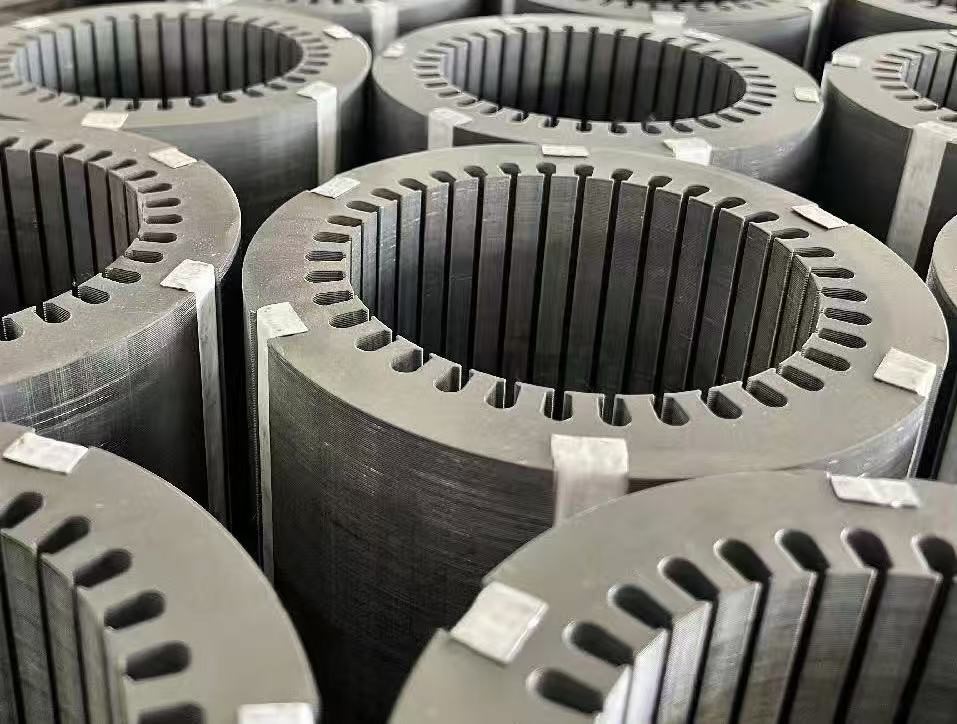
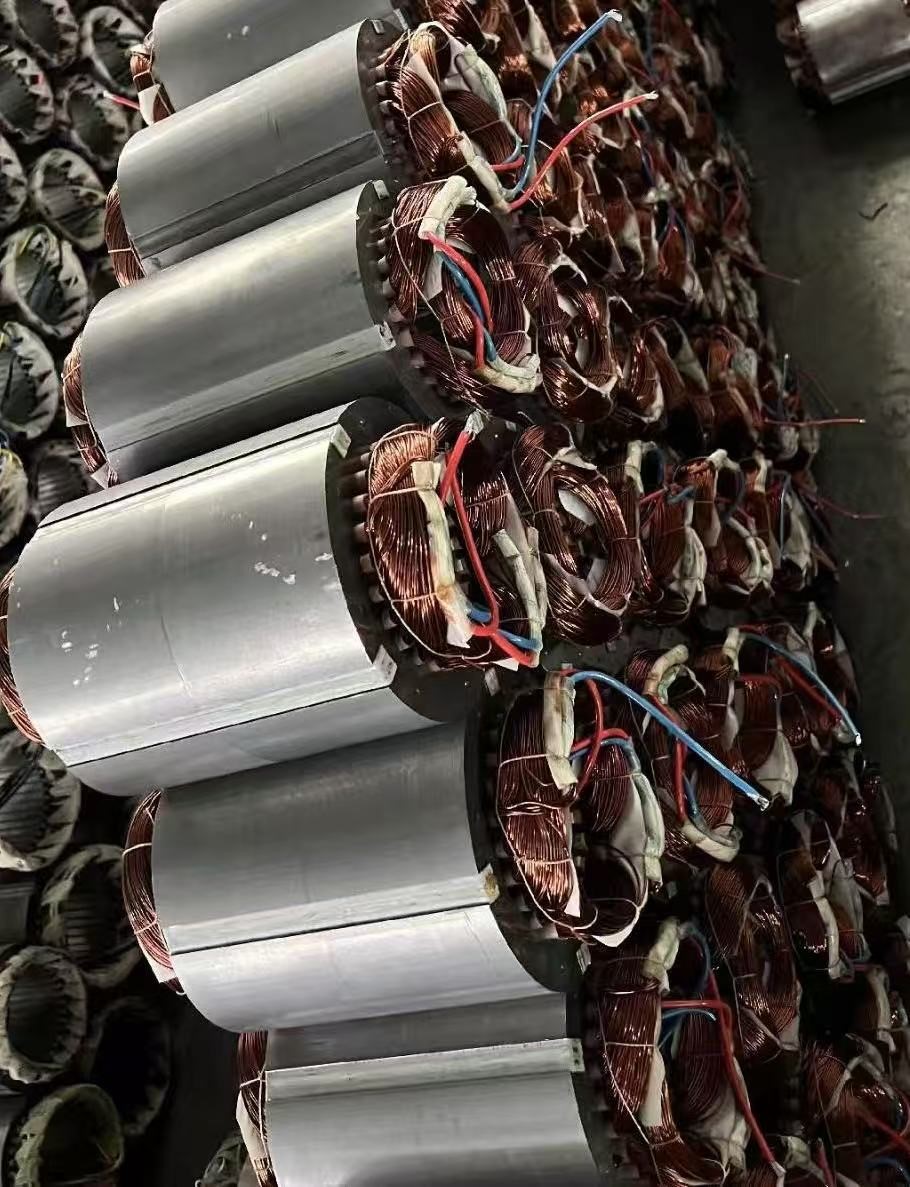
The stator is wound with three-phase or multi-phase windings which are connected to a power source that produces a rotating magnetic field within the stator when alternating current is passed through.
2. rotor:
The rotor is the rotating part of the motor and the common types of rotors are squirrel cage rotor and wire wound rotor.
The squirrel cage rotor consists of cast aluminum or copper bars embedded in slots in the core of the rotor and shorted at both ends by end rings to form a squirrel cage-like structure.
The wire-wound rotor is less common and has separate three-phase windings on the rotor that can be connected to an external electric power supply through slip rings and brushes.
C. Principle of operation of induction motors
The principle of operation of an induction motor is based on the laws of electromagnetic induction and Faraday's law of electromagnetic induction. Its working principle can be explained by the following steps:
1. Energizing the stator to produce a rotating magnetic field: When a three-phase alternating current is passed through the stator windings, the current produces an alternating magnetic field in the stator windings. This alternating magnetic field is rotating and its direction and speed depend on the frequency of the power supply and the number of pole pairs of the motor. Its rotational speed is called “synchronous speed”. 2.
2. Rotor induced current: The rotating magnetic field enters the rotor section through the air gap. Since the rotor is made of electrically conductive material, an electric current is induced in the rotor as the rotating magnetic field passes through it. According to Faraday's Law of Electromagnetic Induction, a change in the magnetic field produces an electric current in the rotor.
3. Torque generated by the rotor: The induced current in the rotor interacts with the magnetic field generated by the stator to form a magnetic force, which generates a torque. This is the source of power to rotate the rotor.
4. Difference between rotor motion and synchronous speed: In an induction motor, the speed of the rotor never reaches the synchronous speed of the rotating magnetic field of the stator. If the rotor speed is the same as the synchronizing speed, no induced current will be generated in the rotor and thus there will be no torque and the motor will not run. Therefore, the rotor speed will always be slightly lower than the synchronous speed, which is the origin of the “asynchronous” motor.
D. Speed and slip of induction motors
The speed of an induction motor is slightly lower than the synchronous speed of the rotating magnetic field generated by the stator, and the difference between the two is called the “slip”. Slippage is an important characteristic of induction motors which directly affects the efficiency and power output of the motor. The size of the slip depends on the size of the motor load, the heavier the load, the larger the slip.
In the formula, the relationship between rotor speed nr and synchronous speed ns is:
E. Operating characteristics and control
1. Starting characteristics:
Induction motors require a large starting current at startup because the slip rate is maximum at startup and the induced current is strongest.
In order to reduce the starting current and starting shock, devices such as soft starters or inverters are usually used to smooth the starting process.
2. Speed control:
Traditionally, induction motors are constant speed motors, but stepless speed regulation can be achieved through the use of variable frequency drives (VFDs).
VFDs can adjust the synchronous speed of the rotating magnetic field by varying the voltage and frequency applied to the stator windings, thus controlling the speed of the motor.
3. efficiency and losses:
Induction motors convert electrical energy into mechanical energy, a portion of the electrical energy is used to overcome losses within the motor (e.g., copper losses, iron losses, etc.), and the remainder is converted into useful mechanical work output.
The efficiency of a motor depends on its design and operating conditions.
To summarize, induction motors work on the basis of the law of electromagnetic induction, in which a rotor current is induced by the relative motion between the rotating magnetic field generated by the stator and the rotor conductor, which in turn generates a torque that drives the rotor to rotate. With the advantages of simple structure, high reliability and stable operation, this type of motor is one of the main types of motors widely used in various industrial and civil fields.