Detailed Explanation of the Structure and Functions of a Three-Phase Asynchronous Motor A three-phas
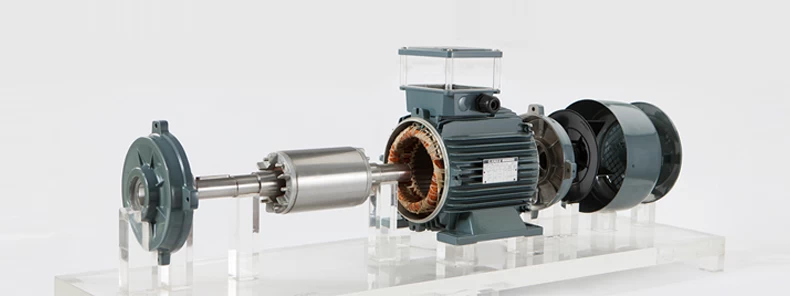
A three-phase asynchronous motor is an electric motor that operates using a three-phase AC power supply. Due to its simple structure, reliable operation, and strong adaptability, it is widely used in industrial and agricultural sectors. This article provides a systematic overview of its internal structure and the functions of its components, helping readers better understand the working principles and characteristics of the motor.
The three-phase asynchronous motor mainly consists of the following major components:
1. Stator
a. Structural Components:
Stator Core: Made by laminating silicon steel sheets with a thickness of 0.35–0.5 mm, the inner circle is punched with evenly distributed slots. The slot design must balance winding processability and electrical performance: semi-closed slots are used for small low-voltage motors to improve efficiency and power factor, while open slots are suitable for high-voltage motors, allowing better insulation treatment for formed windings. The surface of the silicon steel sheet is coated with an insulating layer to effectively reduce eddy current losses.
Stator Windings: Composed of three symmetrical windings spaced 120° apart in electrical angle. Each coil is embedded in the stator slots according to a specific pattern. When connected in either a star or delta configuration to a three-phase power supply, the alternating currents flowing through the windings produce a resultant rotating magnetic field. For a 50 Hz power supply, a two-pole motor has a synchronous speed of 3000 r/min. The magnetic field strength is directly related to the current amplitude.
Frame: The external support structure.
b. Main Functions:
The stator windings, when energized with three-phase AC, generate a rotating magnetic field. This magnetic field cuts through the rotor conductors, inducing current and producing electromagnetic torque. The stator is the main site of magnetic energy conversion within the motor.
c. Additional Notes:
The material and structure of the stator core directly affect the motor’s energy efficiency. The winding design influences starting performance, temperature rise, and operating efficiency.
2. Rotor
a. Types of Structure:
Squirrel-Cage Rotor: Aluminum or copper bars are embedded in the rotor core slots and short-circuited by end rings, forming a closed loop. This simple and reliable structure is suitable for most industrial applications. For motors under 4 kW, cast aluminum rotors offer low-cost manufacturing; motors above 100 kW typically use brazed copper bars to meet cooling and strength requirements.
Wound Rotor: Similar in structure to the stator windings, it connects to an external resistor via slip rings and brushes. By adjusting the resistance, it allows for controlled startup current and smooth speed adjustment, making it ideal for equipment like cranes and hoists with fluctuating loads.
b. Main Functions:
Under the action of the rotating magnetic field, currents are induced in the rotor conductors. These interact with the stator’s magnetic field to produce electromagnetic torque, driving the load and converting electrical energy into mechanical energy.
c. Additional Notes:
Squirrel-cage rotors are robust and low-maintenance, making them standard in industry. Wound rotors offer adjustable starting torque and are better suited for high-load starting applications.
3. Frame / Housing
a. Structural Features:
Typically made of cast iron, aluminum alloy, or welded steel plates. Usually includes mounting holes, cooling ducts, and other structural elements.
b. Main Functions:
Provides support and fixation for the motor; protects internal parts from dust, moisture, and debris; aids in heat dissipation.
c. Additional Notes:
Some high-power motors have water-cooled housings to enhance heat dissipation.
4. End Cover
a. Structural Features:
Installed at both ends of the motor, connecting the frame and the shaft. Equipped with bearing seats or locating holes.
b. Main Functions:
Provides support to ensure stable shaft rotation; seals both ends of the motor to prevent dust and oil from entering the bearings.
5. Bearings
a. Types:
Ball bearings, roller bearings, etc. Rotors are supported by rolling bearings, which operate with grease or oil lubrication to reduce friction. For example, deep groove ball bearings must meet a rated service life of at least 20,000 hours for continuous motor operation.
b. Main Functions:
Support the rotor and ensure coaxial rotation; reduce rotational friction and extend motor lifespan. Some high-precision bearings feature self-aligning or automatic lubrication mechanisms.
6. Cooling Fan & Fan Cover
a. Structural Features:
Typically mounted on the non-drive end of the shaft; protected by an external fan cover.
b. Main Functions:
Provides forced ventilation to dissipate heat from the stator and rotor; ensures the motor’s temperature remains within limits during prolonged operation; improves motor reliability and service life.
7. Terminal Box
Main Functions:
Connects the power supply to the motor windings; typically includes terminal posts and grounding lugs; protects connection points from environmental interference.
Summary
Through the coordinated operation of its components, the three-phase asynchronous motor achieves efficient conversion of electrical energy into mechanical energy. Each structural part plays an indispensable role. Understanding their structure and function helps greatly in equipment selection, maintenance, and troubleshooting.